
Winning the War Against Water for Healthier Tools and Better Results
In the world of compressed air, water is the persistent enemy. It is the natural byproduct of air compression, and if left unmanaged, it can wreak havoc on your pipes, tools, and projects. Achieving clean, dry air is a multi-stage process that involves your compressor, your piping layout, and specialized accessories. Let’s answer your questions on how to effectively banish moisture from your air lines.
I drain my compressor tank, but I still get water. Where is it all coming from?
To understand moisture control, it helps to understand a little bit of physics. The air in your workshop is full of invisible water vapor, and the amount it can hold depends on its temperature and pressure, a concept known as relative humidity. When your compressor squeezes a large volume of air into a small space, this water vapor is concentrated. As the compressed air then cools in the tank and pipes, it loses its ability to hold the moisture, causing the vapor to condense into liquid water. It’s the same process that causes dew to form on grass overnight. So even on a day that doesn’t feel humid, you are introducing a significant amount of water into your system every time the compressor runs.
What is the first line of defense in removing moisture from my system?
Your first and most important moisture removal point is your compressor’s tank. The large surface area of the tank helps the hot, compressed air to cool, causing a large amount of water to condense and collect at the bottom. This is why every compressor tank has a drain valve. Draining this water daily (or even more frequently in humid climates) is the single most effective step you can take. For even better results, many professional systems use an “aftercooler,” which is a device that rapidly cools the air immediately after it leaves the compressor pump but before it enters the tank, causing even more water to drop out where it can be effectively drained away.
How can the design of my piping system help keep my air dry?
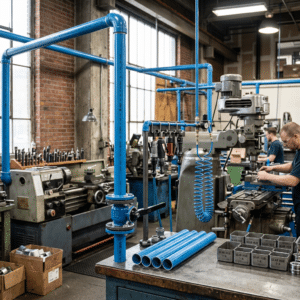
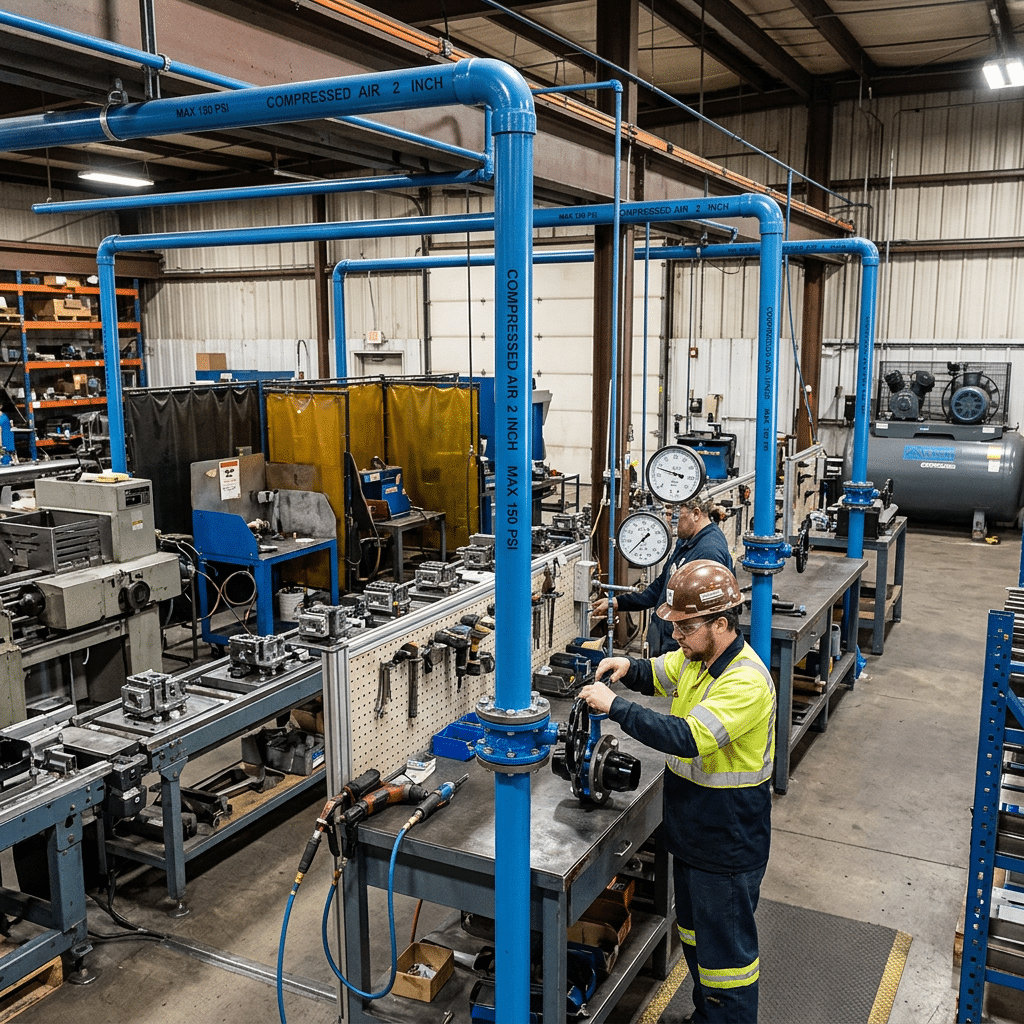
Your piping layout is a powerful tool in the fight against moisture. A properly designed system works with gravity to manage condensation. All horizontal pipe runs should be installed with a slight pitch, about 1 inch of drop for every 10 feet of pipe, sloping away from the compressor. This encourages any water that condenses in the lines to flow to a low point, where a drain valve can be installed. The most critical design element is the “drip leg” at each workstation drop. By using a tee fitting at the bottom of a vertical pipe run, with the air outlet on the side and a drain on the bottom, you create a trap that prevents water from making the turn into your air hose. This simple, passive design is remarkably effective at separating liquid water from the air stream.
For sensitive jobs like painting, how do I get the air perfectly dry?
For applications where even the smallest amount of moisture is unacceptable, you need a final, point-of-use drying solution. This is where specialized filters come into play. A “coalescing filter” is designed to capture and remove extremely fine aerosolized oil and water particles. For the absolute driest air, a “desiccant dryer” is used. These devices contain a material, much like the silica gel packets found in new shoes, that actively absorbs water vapor from the air. By placing one of these filter and dryer units just before your spray gun or sensitive pneumatic tool, you can be confident that the air reaching your work is as clean and dry as possible, ensuring a perfect, professional result every time.