
Your compressed air piping can affect the quality of the air reaching your tools and equipment. Some pipe materials can develop rust, while contamination can also come from moisture, compressor lubricant, intake air, and debris left during installation. Choosing corrosion-resistant piping helps reduce one potential source of contamination, but clean compressed air requires attention to the entire system.
At Aluminum Air Pipe, we understand why customers ask this question. Whether you operate an automotive shop, fabrication facility, or production line, you want dependable air without unwanted particles or moisture affecting your work. Here are answers to common questions about compressed air pipe rust and air supply contamination.
Will compressed air pipe rust inside?
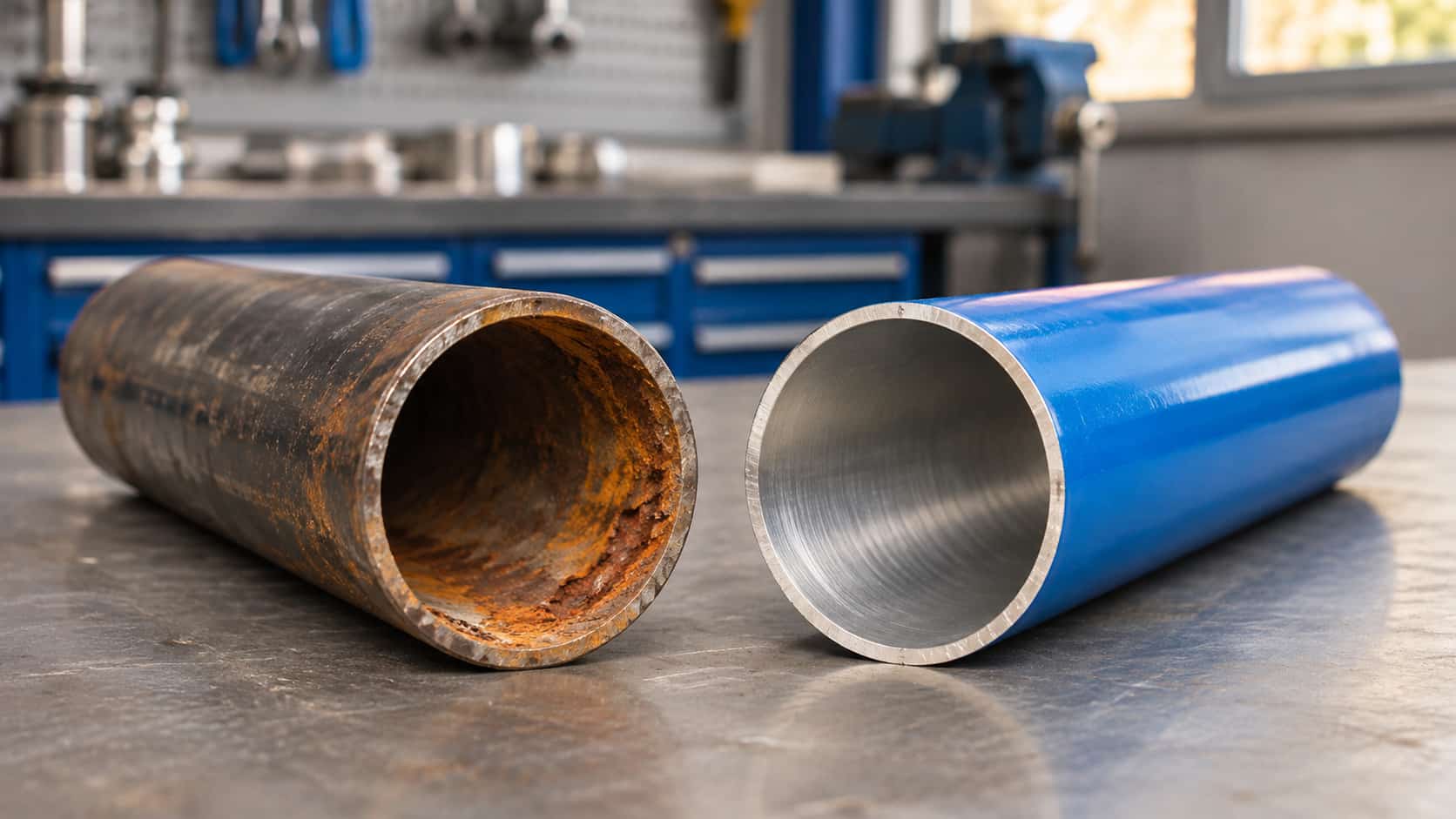
It depends on the material and operating conditions. Uncoated steel, often called black iron pipe, can develop internal rust when moisture and oxygen are present. Rust and scale may eventually loosen and travel downstream, contributing to dirty air and maintenance problems.
The Compressed Air and Gas Institute’s compressed air purity guide explains how contamination can accumulate inside distribution piping and air receivers. Rust and pipe scale can break free, foul filters, and obstruct small passages in pneumatic equipment.
Does aluminum compressed air pipe rust?
Aluminum does not develop the iron rust associated with steel piping. That makes it an attractive material for compressed air distribution, particularly when customers want to reduce the risk of rust particles originating inside the pipe.
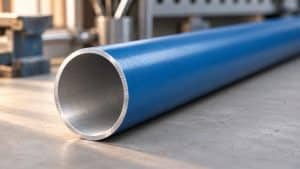
Aluminum Air Pipe offers AIRnet compressed air pipe, made from corrosion-resistant aluminum with an additional protective coating inside and outside. This construction helps protect the piping while providing a smooth internal surface for air distribution. However, corrosion resistance should not be confused with immunity to every chemical or environmental condition. Always confirm that the selected system is suitable for its surroundings and intended service.
Does corrosion-resistant pipe guarantee clean compressed air?
No. Corrosion-resistant pipe helps reduce contamination from deterioration of the pipe itself, but it cannot remove contaminants already present in the air supply. Water, oil, dust, and compressor wear particles can still enter or move through the distribution network.
Think of piping as one part of an air quality plan. Suitable pipe materials help preserve air quality, while properly selected treatment equipment addresses specific contaminants. A reliable installation brings those functions together rather than expecting the pipe alone to clean the air.
Where does moisture in compressed air lines come from?
The air entering a compressor contains water vapor. As the compressed air cools, some of that vapor can condense into liquid water. Without appropriate treatment and drainage, moisture can collect in receivers and distribution lines.
Water can contribute to corrosion in susceptible metal components and interfere with tools or production processes. Aluminum piping does not eliminate condensation, so moisture control remains important even after replacing an older steel distribution system. The amount and type of treatment needed depend on your operating conditions and the equipment using the air.
Will an air filter remove every contaminant?
No single filter should be assumed to remove every form of contamination. Particulate filters address solid particles, while coalescing filters target liquid aerosols such as oil and water droplets. Water vapor requires appropriate drying, and certain vapor contaminants may require additional treatment.
The U.S. Department of Energy’s guidance on maintaining compressed air quality recommends determining the requirements of the equipment first, then configuring suitable treatment. It also emphasizes maintenance, because treatment equipment must remain in good working condition to sustain the desired air quality.
Can an oil-free compressor still supply contaminated air?
Yes. An oil-free compressor avoids intentionally introducing lubricant into the compression chamber, but its intake air can still contain moisture, particles, and airborne hydrocarbons. Contamination may also originate elsewhere in the system.
An oil-free compressor therefore does not automatically eliminate the need for filtration, drying, or air quality verification. Select treatment around the required air quality at the point of use, considering both the compressor and the distribution network.
Can fittings and older components contaminate a new aluminum piping system?
Yes. Replacing the main pipe does not remove contamination already present in retained receivers, hoses, fittings, or older branches. Those components should be considered when investigating an air quality problem or planning an upgrade.
Installation cleanliness also matters. Pipe preparation and assembly should follow the manufacturer’s instructions, with care taken to prevent dirt and preparation debris from remaining inside the system. Specifying new aluminum pipe is a useful step, but the complete air path deserves attention.
How can outlet design help keep water away from tools?
The location and design of branch connections can help manage liquid condensate within a distribution system. A well-planned installation considers how air reaches each workstation and where collected water will be removed.
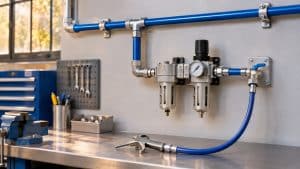
Aluminum Air Pipe’s Quick Drops provide connections from a header pipe and are designed to help limit liquid condensate carryover into drop lines. They support a broader moisture-management plan that includes appropriate dryers, separators, and drains. They do not remove water vapor or replace air treatment equipment.
How do I know whether my air supply is contaminated?
Water appearing at an outlet, particles collecting in filters, or recurring equipment problems can be reasons to investigate. However, visual checks alone cannot establish air purity. Some contaminants are too small to see, and an apparently clean air stream may still fail to meet a process requirement.
Start with the equipment manufacturer’s air quality specifications. Where air quality is critical, arrange suitable testing at the point of use. Testing helps identify the problem and gives you a sound basis for selecting treatment rather than replacing components by guesswork.
Will upgrading to aluminum pipe solve an existing rust problem?
Replacing deteriorating steel piping with suitable aluminum piping can remove an ongoing source of iron rust from the replaced sections. It will not automatically clear contamination elsewhere or correct a moisture problem upstream.
Before an upgrade, review the condition of retained components, drainage, treatment equipment, and distribution layout. This approach helps ensure the new pipe becomes part of a lasting improvement.
How can Aluminum Air Pipe help protect my air supply?
Start by sharing your facility layout, operating pressure, airflow demand, and equipment requirements. These details help guide pipe selection and identify questions that need to be addressed in the overall design.
Aluminum Air Pipe offers free design services, pipe sizing, and bill of material creation to help customers plan their distribution systems. With corrosion-resistant piping, suitable air treatment, and consistent maintenance, you can reduce contamination risks and deliver air that meets the needs of your workspace.