
The best compressed air piping system fits the equipment you use, the distance air must travel, and the demands of your workspace. A home garage with one occasional user has different needs from a busy automotive shop or a manufacturing facility operating across multiple shifts. For many of these applications, purpose-built aluminum piping offers a practical combination of corrosion resistance, manageable weight, and flexibility.
Choosing the right system starts with understanding how you use compressed air. At Aluminum Air Pipe, we help customers turn those everyday requirements into a distribution layout that supports dependable performance. These common questions can help you decide what belongs in your garage, shop, or facility.
What is the best compressed air piping system for a home garage?
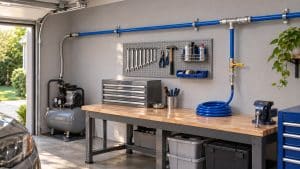
For a home garage with several permanent air outlets, modular aluminum piping is an excellent option to consider. It provides an organized way to distribute air around the workspace and can accommodate changes as your collection of tools grows. A compact main line with conveniently located outlets may be all you need.
If you only use one tool near the compressor occasionally, a properly rated air hose may meet your needs without permanent distribution piping. However, when hoses regularly cross the floor or you need air at opposite ends of the garage, a fixed piping system can make the workspace more convenient.
What should I consider before installing garage air lines?
Start with the airflow and pressure requirements of your tools. A tire inflator and a continuously operating sander can place very different demands on a compressor and its distribution system. Consider which tools will run simultaneously, where you will use them, and whether you expect to add equipment.
Measure the proposed pipe route rather than relying only on the garage’s floor area. Include the distance to each outlet and consider restrictions through hoses and connectors. These details help determine an appropriate pipe size and prevent a convenient-looking layout from becoming an airflow bottleneck.
Which compressed air piping system works best for an auto shop?
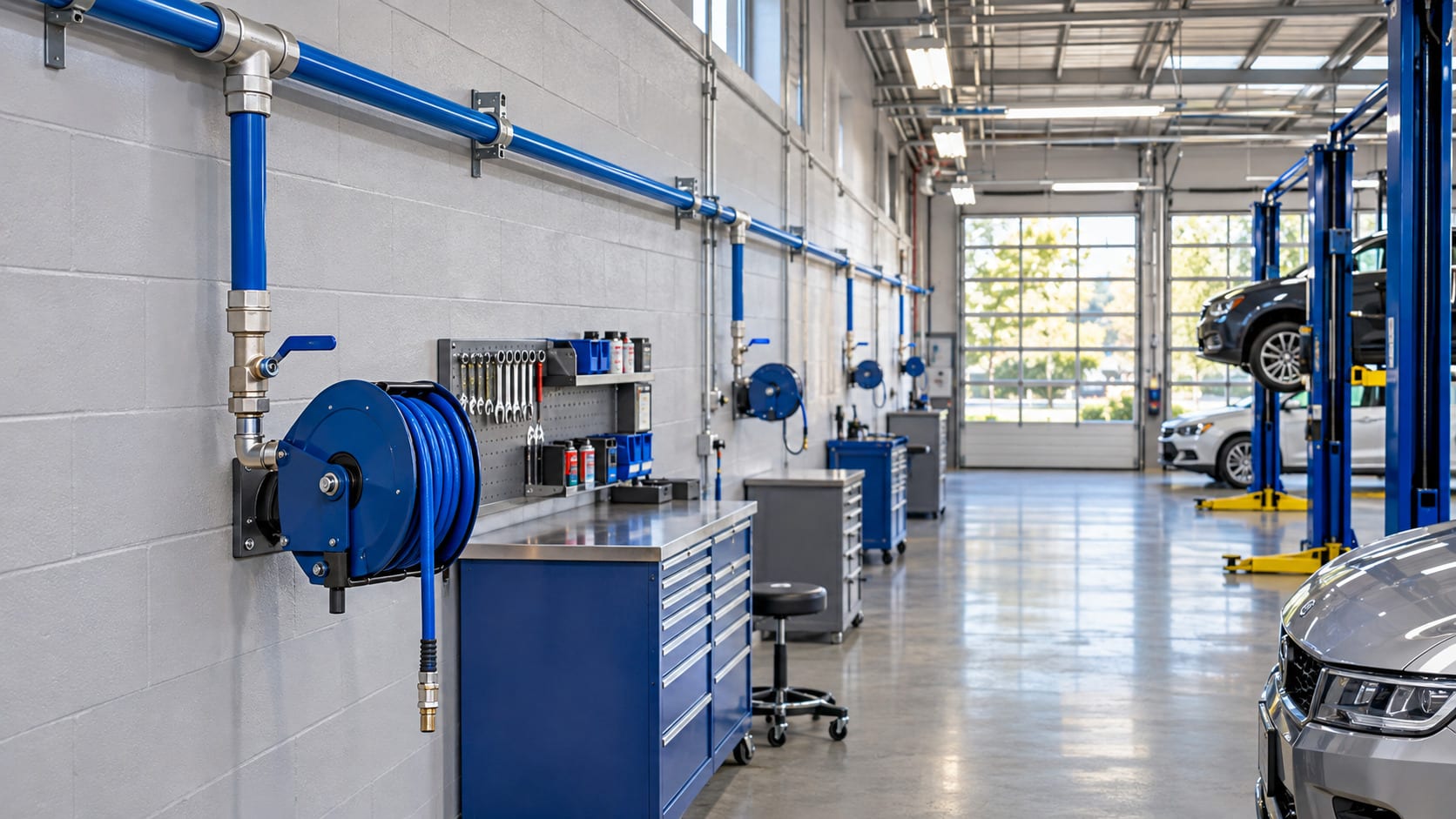
A busy auto shop often benefits from a modular aluminum system with a main distribution line and dedicated drops serving individual bays. The layout should support the combined demand of technicians using impact tools, tire equipment, grinders, and other pneumatic devices.
Aluminum Air Pipe’s AIRnet compressed air pipe is available in multiple diameters and features corrosion-resistant aluminum with an additional protective coating inside and outside. This makes it a strong candidate for automotive facilities seeking a durable distribution system that can be planned around current equipment and future expansion.
Should an auto shop use a loop piping layout?
A loop, also called a ring main, is often worth evaluating when several bays are spread throughout a building. With an appropriately designed loop, air can reach outlets through more than one path, helping reduce distribution restrictions.
A straight main with branches may still be suitable for a smaller or narrower shop. The better choice depends on the building layout, total airflow, pipe diameter, and acceptable pressure loss. A loop cannot compensate for undersized piping or restrictive connections, so the complete layout needs to be evaluated.
What is the best air piping system for a manufacturing facility?
Manufacturing facilities need a system selected around production demand, reliability, air quality, and maintenance access. Modular aluminum piping can work well for many general industrial applications, especially where equipment locations change or new production cells are added.
Some processes require a different material or a specialized installation. Chemical exposure, unusual temperatures, stringent cleanliness requirements, or applicable codes may make stainless steel or another specified system more appropriate. The right industrial compressed air piping system should satisfy the process requirements before material preferences determine the design.
How do I choose the correct compressed air pipe size?
Pipe sizing should account for airflow demand, operating pressure, run length, fittings, and allowable pressure drop. The compressor’s outlet connection alone does not establish the right diameter for the entire distribution network.
Compressed Air Challenge’s guidance on distribution piping and pressure drop recommends considering anticipated expansion when sizing mains and distribution piping. Planning for realistic growth can help avoid excessive pressure losses when equipment is added later.
A useful starting point is the combined demand of equipment expected to operate at the same time. From there, a sizing review can determine how the pipe route and individual branches affect delivery to the most demanding locations.
Does every workstation need the same air quality?
No. Air quality requirements depend on the work being performed. General pneumatic tools, painting equipment, and sensitive production processes may require different limits for moisture, particles, and lubricant contamination.
The U.S. Department of Energy’s guidance on maintaining compressed air quality recommends establishing end-use requirements before selecting treatment equipment. Appropriate filters, dryers, separators, and drains should be chosen around those needs and maintained consistently. Corrosion-resistant piping helps preserve air quality, but it does not replace air treatment.
How should I organize outlets at a workbench or service bay?
Place outlets where they support the work without requiring unnecessarily long hose runs. Consider access, equipment movement, and how technicians will connect and disconnect their tools. Convenient outlet placement can make a piping upgrade valuable even before future expansion is considered.
A wall-mounted air manifold can provide a centralized connection point for distributing air at a workstation. Select compatible connections and confirm that the manifold, hoses, and couplers can handle the required flow. Several outlets do not increase the capacity of the line feeding them.
Is aluminum always less expensive than steel or copper?
The answer depends on the project. Compare the complete installed cost, including pipe, fittings, supports, labor, tools, and any interruption to operations. Then consider maintenance and the likely cost of future modifications.
A modular aluminum system may offer practical advantages when equipment moves frequently. An existing, serviceable copper or steel system may continue to meet its intended requirements. Comparing suitable options against your actual layout gives you a clearer decision than comparing pipe prices alone.
How can Aluminum Air Pipe help me select the right system?
Share a dimensional drawing of your space, compressor information, operating pressure, and equipment airflow requirements. Explain how the workspace operates today and what changes you anticipate. Those details help guide a system that fits your needs.
Aluminum Air Pipe offers free design services, pipe sizing, and bill of material creation for customers planning compressed air distribution projects. Whether you are organizing a home garage, supplying several automotive bays, or expanding a manufacturing floor, our team can help you choose suitable components and develop a practical piping layout.