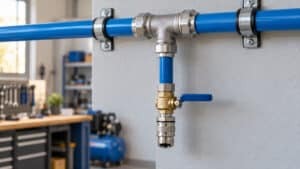

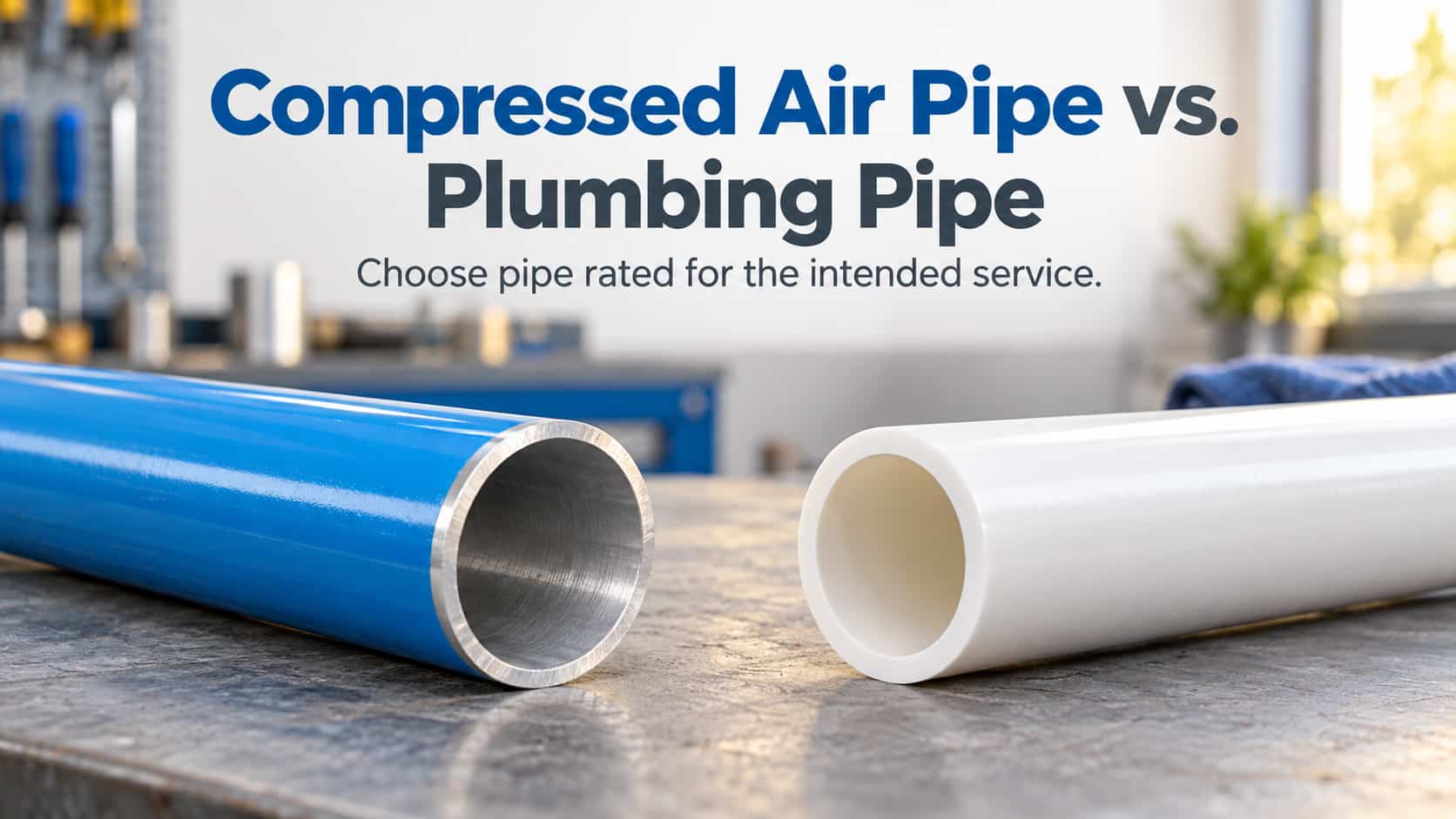
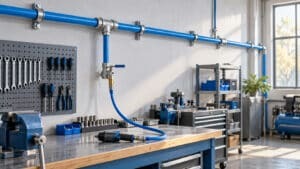
At first glance, compressed air pipe and regular plumbing pipe can look similar. Both move something from one location to another, and both use connections, valves, and supports. However, a pipe suitable for carrying water is not automatically suitable for carrying compressed air. The intended service, material, fittings, and operating conditions all matter.
Whether you are building a workshop or expanding an industrial facility, understanding these differences can help you choose a dependable system. At Aluminum Air Pipe, we help customers look beyond appearances and select piping around the actual needs of their equipment.
What is the main difference between compressed air pipe and regular plumbing pipe?
Compressed air piping is specified for distributing pressurized gas, while water plumbing piping is specified for carrying water. Compressed air service requires consideration of stored energy, material failure behavior, airflow, temperature, and compatibility with substances such as compressor lubricant.
Some materials, including properly specified copper and steel, can serve in either application. The distinction is therefore more than the name on the pipe. You need to verify that the complete piping system, including its joints and fittings, is suitable for compressed air under your operating conditions.
Why does it matter whether a pipe carries water or air?
Air is compressible, meaning a compressor can force it into a smaller volume and store energy. If an air line ruptures, the gas can expand rapidly and release that energy. A brittle pipe material may break into fragments that become dangerous projectiles.
Water is much less compressible, so the behavior of a water-filled system differs from that of a compressed gas system. Water piping failures can still be hazardous, but a water pressure rating does not establish suitability for compressed air. Material selection must account for the intended service and potential failure behavior.
Can I use ordinary PVC plumbing pipe for compressed air?
Ordinary PVC plumbing pipe should not be used for exposed compressed air distribution. Its water pressure rating does not make it appropriate for compressed gas, and thicker Schedule 80 walls do not resolve the concern about shattering.
The Occupational Safety and Health Administration’s compressed air piping safety guidance explains the need for shatter-resistant materials or protective encasement in above-ground thermoplastic air piping. For a typical workshop, select a purpose-built compressed air system rather than repurposing ordinary PVC plumbing pipe.
Does a high pressure rating mean plumbing pipe is safe for compressed air?
No. A pressure rating needs to be read together with the manufacturer’s permitted applications and operating conditions. A number printed on a pipe is not a blanket approval for every fluid, gas, temperature, or connection method.
Review the documentation for the pipe, fittings, seals, valves, and joints. Every component needs to be suitable for the intended compressed air service. A strong pipe connected with an unsuitable fitting still creates an unsuitable system.
Why is aluminum commonly used for compressed air piping?
Purpose-built aluminum systems offer corrosion resistance, manageable weight, and modular assembly. Aluminum does not develop the iron rust associated with uncoated steel, making it an appealing choice for distributing air throughout a shop or facility.
Aluminum Air Pipe’s AIRnet compressed air pipe features corrosion-resistant aluminum with an additional protective coating inside and outside. Multiple diameters allow customers to choose pipe around their airflow requirements. These features support a practical installation, but proper sizing and compatible connections remain essential.
Are compressed air pipe fittings different from plumbing fittings?
They can be. Modular compressed air systems often use fittings designed for a particular pipe diameter, outside dimension, seal arrangement, and connection method. Plumbing systems may use threaded, soldered, pressed, or solvent-welded connections, depending on the material and application.
Some fitting types can be used in both services when properly specified. However, matching the apparent size is not enough to establish compatibility. Follow the piping manufacturer’s requirements and use specified adapters when connecting different systems.
Is compressed air pipe sized differently from water pipe?
Yes. Compressed air piping is sized around airflow demand, operating pressure, allowable pressure loss, run length, and layout. Airflow is commonly expressed in cubic feet per minute, or CFM, while pressure is commonly expressed in pounds per square inch, or PSI.
Water systems have their own sizing methods based on liquid flow and fixture demand. Selecting an air line because it resembles a familiar water line can lead to inadequate capacity. Consider how many tools operate simultaneously and whether you expect to add equipment later.
Why is pressure drop important in compressed air piping?
Pressure drop is the loss of pressure as air moves through pipe, fittings, filters, hoses, and other components. Excessive pressure loss can leave equipment without the pressure it needs, even when the compressor appears to be operating normally.
The U.S. Department of Energy’s compressed air efficiency resources address system analysis, pressure management, leaks, and maintenance. A suitable pipe material contributes to the design, but diameter, routing, connections, and air treatment also influence performance. Raising compressor pressure should not replace investigating distribution problems.
Why do compressed air lines need moisture management?
A compressed air system can develop liquid condensate as compressed air cools. That moisture can affect tools, processes, and piping, so the distribution layout needs to work with appropriate dryers, filters, and drains.
Outlet connections also play a role. Aluminum Air Pipe’s Quick Drops provide branch connections from a header and are designed to help limit liquid condensate carryover into drop lines. They complement moisture-control equipment rather than replace it. Corrosion-resistant piping does not remove water vapor from the air.
Can I reuse existing plumbing pipe for an air system?
Do not assume an existing water line can be converted simply by attaching it to a compressor. Its material, condition, fittings, joint methods, and operating limits need to be evaluated for the new service. Internal contamination and the requirements of the equipment receiving the air also deserve attention.
A qualified installer can help determine whether existing components are appropriate or whether replacement is the better approach. Reviewing the whole installation gives you a clearer answer than checking pipe material alone.
How do I choose the right compressed air piping system?
Start with your equipment’s airflow needs, operating pressure, facility layout, and environmental conditions. Then select a piping system intended for compressed air and plan the complete installation, including supports, outlets, isolation valves, and moisture management.
Aluminum Air Pipe offers free design services, pipe sizing, and bill of material creation to help customers plan new installations and expansions. Share your layout and operating requirements with our team to get started. Understanding the difference between compressed air pipe and regular plumbing pipe helps you make a confident choice and build a distribution system that serves your workspace well.