
Elevating Your Craft with the Power of Compressed Air
For the modern woodworker, compressed air has become an indispensable utility. It drives brad nailers and staplers with precision, powers sanders, blows away dust for joinery, and provides the flawless atomization for HVLP spray finishing. Yet, many craftspeople still struggle with tangled hoses, noisy compressors, and the frustrating results of contaminated air. A well-planned aluminum air pipe system can solve these problems, creating a safer, cleaner, and more enjoyable workshop.
I mostly use small nail guns. Is a full piped system really necessary?
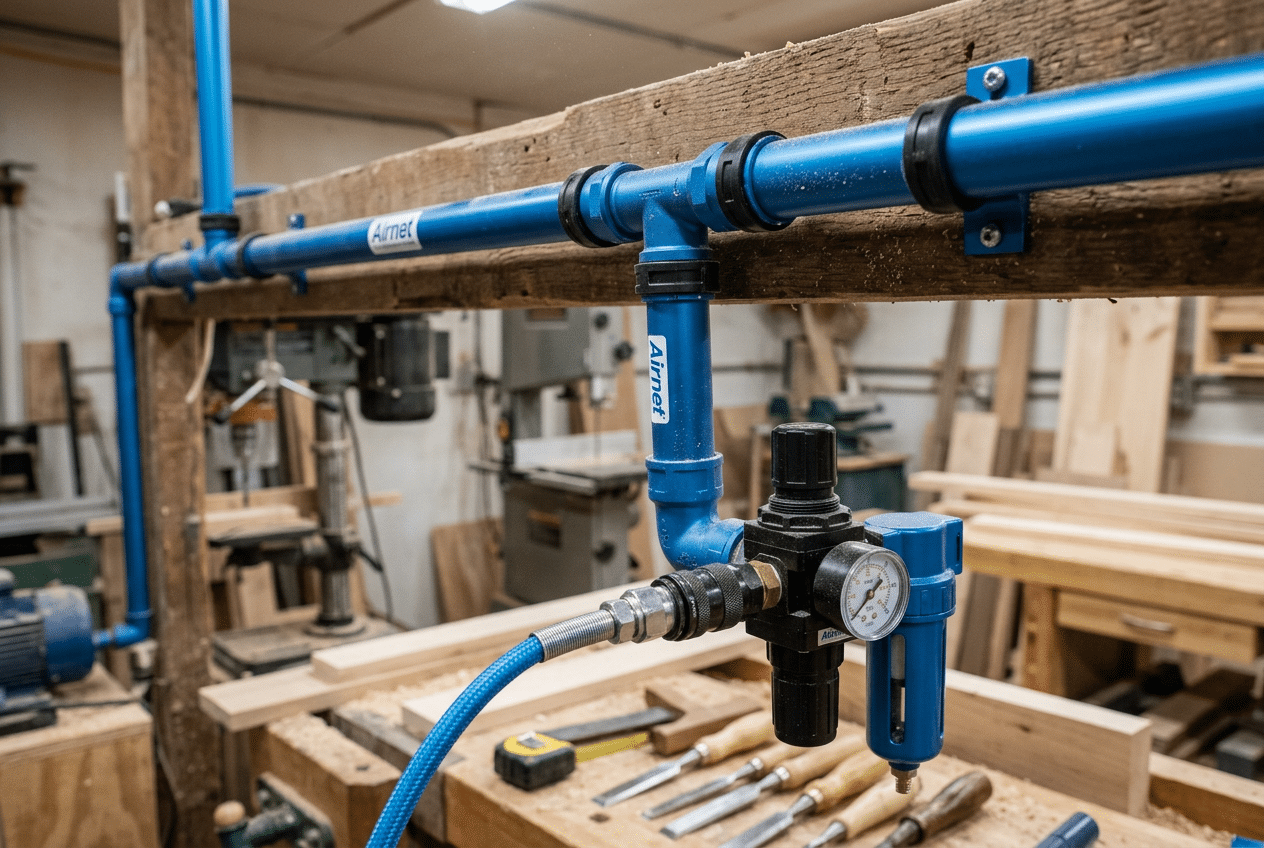
While it’s true that a small pneumatic nailer doesn’t require a huge volume of air, the benefits of a piped system go far beyond simple air delivery. The primary advantage is safety and convenience. A piped system allows you to install hose reels on the ceiling or wall, keeping your air hose off the floor where it can be a dangerous trip hazard and get tangled around projects. It also allows you to move your noisy compressor to a closet, shed, or corner of the shop, dramatically reducing the noise level in your primary workspace. Finally, a permanent system with proper moisture management, like drip legs, protects your tools from internal rust and ensures they fire consistently every time you pull the trigger, a level of reliability that any serious craftsman can appreciate.
How can compressed air help me with dust management?
In woodworking, dust is a constant battle. While a dedicated dust collection system is essential for machines, compressed air is perfect for targeted cleanup. A simple blow gun is invaluable for clearing dust from intricate joinery before glue-up, cleaning out mortises, or blowing off a project before applying a finish. However, you must be careful. An unregulated, high-pressure blast can drive dust deep into the wood grain. This is where a small point-of-use regulator becomes handy, allowing you to dial down the pressure for a gentler puff of air. It’s also a great way to clean out the filters in your shop vac and dust collector, helping them maintain peak performance.
I want to start spray finishing. What do I need to know about the air supply?
Spray finishing can produce results that are impossible to achieve with a brush, but it is extremely sensitive to air quality. This is where your air system plays a starring role. To avoid defects like “fisheyes” from water or oil, you need exceptionally clean and dry air. This process starts by choosing a pipe material that won’t add contaminants, making rust-free aluminum pipe the ideal choice. The next critical component is a high-quality filter and regulator at your spray station. Many woodworkers, following advice from resources like Fine Woodworking Magazine, use a two-stage filtering process: a primary filter to catch larger particles and water, followed by a desiccant or coalescing filter to remove the last traces of moisture and oil vapor right before the spray gun.
My workshop is part of my home garage. Is installation a messy or difficult process?
This is a common concern, and it highlights one of the best features of a modern aluminum air system. Unlike steel pipe that requires messy cutting oils and thread sealants, or copper that requires a torch and soldering flux, aluminum systems are incredibly clean to install. The pipe is cut cleanly with a simple hand tool, and the connections are made by simply pushing the pipe into the fitting. There are no fumes, no mess, and no special skills required. The lightweight nature of the pipe makes it easy for one person to handle and mount. We even offer complete garage kits that bundle all the necessary components, making it a perfect weekend project to transform a home garage into a truly professional-grade workshop.