
For many shop owners and facility managers, the compressed air system is one of those things that fades into the background. As long as the compressor kicks on and the tools spin, everything seems fine. But behind the scenes, an aging or poorly designed system could be quietly draining your budget, degrading the quality of your work, and even putting your team at risk. At Aluminum Air Pipe, we talk to people every day who are surprised to learn just how much performance and money they’ve been leaving on the table. Here are some of the most common questions we receive about upgrading and optimizing a compressed air network.
My current system seems to work fine. How do I know if I actually need an upgrade?
This is a great starting point, and the honest answer is that many underperforming systems don’t announce themselves with dramatic failures. Instead, they reveal themselves through subtle, costly symptoms. Ask yourself a few simple questions. Do your air tools ever feel sluggish or underpowered, especially when multiple tools are running at the same time? Do you hear a faint hissing sound when you walk near your pipes or fittings during quiet moments? Have you noticed moisture or discolored residue coming out of your air lines? Does your compressor seem to run constantly, even when demand is light? If you answered yes to any of these, your system is likely suffering from a combination of pressure drop, air leaks, and internal contamination. These are classic signs of an aging steel or iron piping system that has begun to corrode from the inside out. The buildup of rust and scale narrows the internal diameter of the pipe, chokes airflow, and introduces harmful particulates into your air supply. An upgrade isn’t just about getting something new and shiny; it’s about reclaiming the performance and energy you’re already paying for.
How much money can I actually save by switching to aluminum piping?
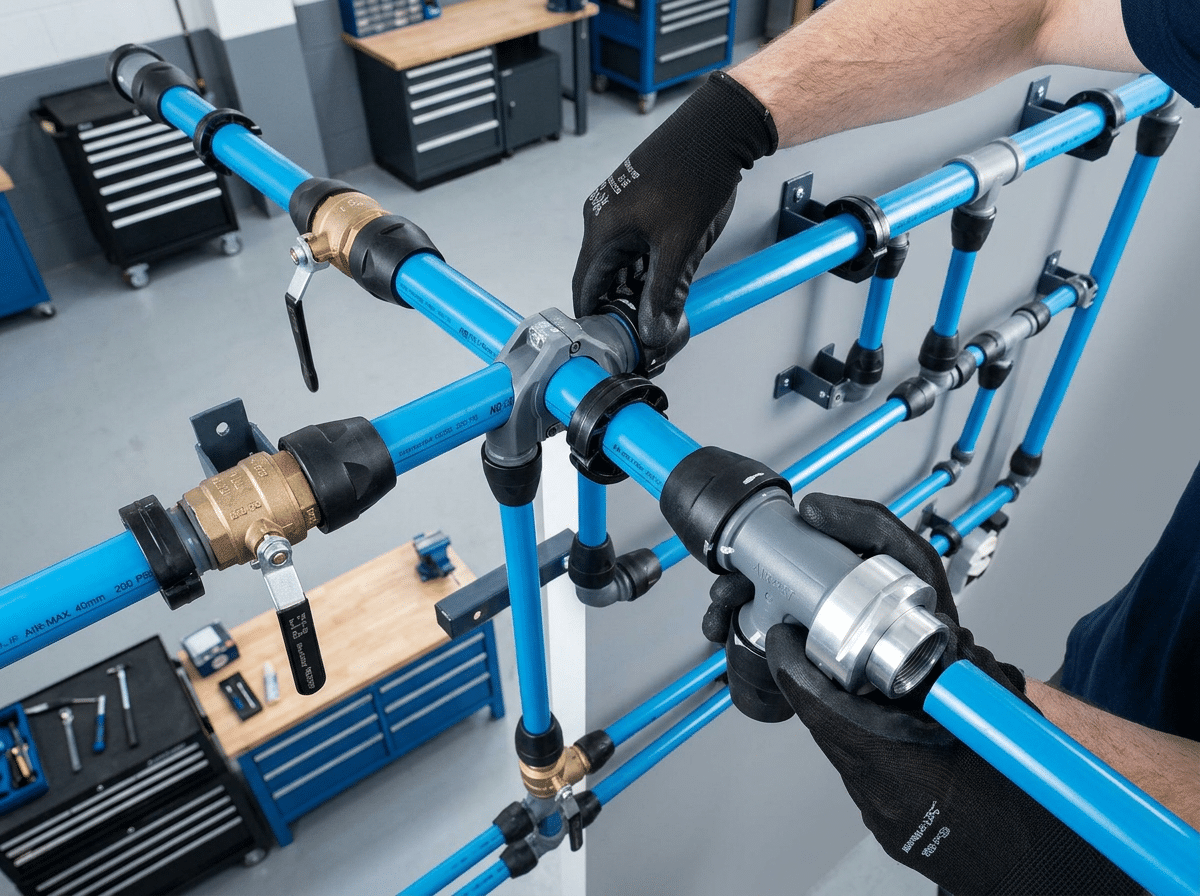
The savings from upgrading to a high-quality aluminum compressed air piping system are both immediate and long-lasting. Let’s start with leaks. According to the U.S. Department of Energy, leaks can account for twenty to thirty percent of a compressor’s output in a poorly maintained system. Every cubic foot of air that escapes through a corroded fitting or a pinhole in a rusted pipe is energy your compressor used electricity to produce, completely wasted. Over the course of a year, even a few small leaks can add up to hundreds or even thousands of dollars in unnecessary electricity costs. When you install a new aluminum system with precision-engineered, push-to-connect fittings, you are essentially sealing the envelope of your entire air network. The connections are mechanically sound and remain leak-free for the life of the system because the material itself does not degrade. Beyond leak elimination, the consistently smooth interior of aluminum pipe dramatically reduces pressure drop. This means you can often lower the discharge pressure setting on your compressor while still delivering the same working pressure at the tool. Since every two-psi reduction in compressor output translates to roughly a one percent reduction in energy consumption, the compounding savings over time are substantial. Many of our customers find that the system pays for itself within the first year or two of operation.
I’ve heard about PVC being used for compressed air. Isn’t that a cheaper alternative?
This is a question we take very seriously because it involves safety. While PVC pipe is inexpensive and readily available at any hardware store, it is fundamentally unsuitable and genuinely dangerous for use in a compressed air system. PVC is designed for low-pressure water and drainage applications. When subjected to the pressures found in a compressed air system, and especially when combined with the oils and lubricants commonly present in compressor output, PVC becomes brittle over time. When it fails, it does not simply crack or develop a slow leak like metal pipe. Instead, it shatters violently, sending sharp plastic shards in every direction like shrapnel. This is not a theoretical risk; it is a well-documented hazard that has caused serious injuries. Organizations like OSHA do not approve PVC for compressed air transport, and no reputable manufacturer recommends it. While the upfront cost of PVC might seem appealing, the liability, the danger, and the lack of any performance benefit make it a choice that simply is not worth the risk. A properly engineered aluminum system offers a genuinely affordable path to a professional-grade installation without compromising safety.
What about the air quality itself? Can my piping really affect the tools and products I work with?
Absolutely, and this is a point that is often underestimated. The condition of your piping has a direct and significant impact on the quality of the air that reaches your equipment. In a corroded steel system, every breath of air that travels through the pipes picks up microscopic rust particles, scale, and moisture that has condensed on the rough, pitted interior surfaces. This contaminated air then gets blasted directly into your tools, your paint guns, your pneumatic cylinders, and your processes. For automotive painters, this means fish eyes, orange peel, and costly rework. For woodworkers, it means moisture spots on finishes. For manufacturers, it means premature wear on expensive pneumatic actuators and valves. The smooth, inert interior of aluminum piping provides a clean pathway that does not introduce any contaminants into your air supply. Combined with appropriate filtration and air treatment accessories from our complete product range, you can achieve and maintain the specific air quality standards your application demands, protecting your investment in tools and ensuring a consistently high-quality finished product.
Is an aluminum system durable enough for a demanding industrial environment?
Without question. There is sometimes a misconception that because aluminum is lighter than steel, it must be less durable. In fact, the opposite is true when it comes to compressed air applications. The primary enemy of any piping system is corrosion, and this is a battle that steel will always lose. From the very first day of operation, moisture in the compressed air begins to attack the interior walls of a steel pipe. Over time, this relentless process weakens the pipe, narrows its bore, and creates leak points. Aluminum is inherently resistant to this type of corrosion. It will not rust, pit, or scale. The pipe you install today will have the same smooth interior and the same structural integrity decades from now. This longevity, combined with its impressive pressure ratings and its resistance to vibration and thermal cycling, makes aluminum the ideal material for even the most demanding shop floors and industrial facilities. It is a material that gets stronger in value over time because it simply does not wear out.
At Aluminum Air Pipe, we understand that upgrading your system is a significant decision. Our mission is to make that decision easy by providing superior products, honest guidance, and a complete range of components that take you from your compressor outlet to every single point of use in your facility. When you’re ready to stop settling for “good enough,” we’re here to help you build something exceptional.