
Uncovering the Hidden Savings and Return on Investment
When considering a workshop upgrade, the first question is often, “What will it cost?” But the savvier question is, “What is the return on this investment?” Upgrading from an old, inefficient air pipe system to a modern aluminum network is not just an expense; it’s a strategic investment that pays you back in multiple ways. Let’s break down the real-world value and answer your questions about the return on investment (ROI).
You mention energy savings, but how much money can I really save?
The energy savings are real, and they come from two main sources: eliminating leaks and reducing pressure drop. According to the Department of Energy, a single 1/8-inch air leak at 100 PSI can cost over a thousand dollars per year in wasted electricity. An old threaded steel system is likely riddled with dozens of smaller, often inaudible leaks that add up to a significant drain on your power bill. Our quick-connect fittings are engineered to create a secure, leak-free seal that eliminates this waste. Furthermore, by reducing pressure drop, your compressor doesn’t have to be set to an artificially high pressure to compensate, meaning it runs less often and more efficiently. Over the life of the system, these combined energy savings can often be enough to pay for the entire cost of the material upgrade.
How does an aluminum air pipe system help my expensive tools last longer?
Your pneumatic tools represent a significant investment, and the biggest threat to their longevity is contaminated air. Rust and scale from old steel pipes act like liquid sandpaper inside your tools, scouring cylinders, wearing out seals, and causing them to fail prematurely. Water in the lines washes away internal lubricants and causes corrosion from the inside out. By providing a pathway that is free from rust and scale, an aluminum air pipe system ensures that only clean air reaches your tools. When combined with proper filtration to remove moisture, you dramatically extend the life of every air tool in your shop, reducing repair costs and delaying the need for expensive replacements. This “tool preservation” is a tangible part of your ROI.
What is the “Total Cost of Ownership” and how does aluminum compare?
Total Cost of Ownership (TCO) is a crucial concept for any smart buyer. It looks beyond the initial price tag to consider all associated costs over the product’s lifetime. While a roll of PVC pipe might seem cheapest upfront (though it’s dangerously unsafe), and black iron pipe might have a low material cost, their TCO is much higher. For steel, you must factor in the high cost of labor for a difficult, time-consuming installation. Then you add the ongoing costs of wasted energy from leaks and pressure drop, the cost of replacing tools damaged by rust, and the cost of lost productivity from system failures. An aluminum system, with its fast and easy installation (lower labor cost) and near-zero ongoing costs from energy waste or tool damage, presents a far lower Total Cost of Ownership, making it the more economical choice in the long run.
Can a better air system actually make me more productive?
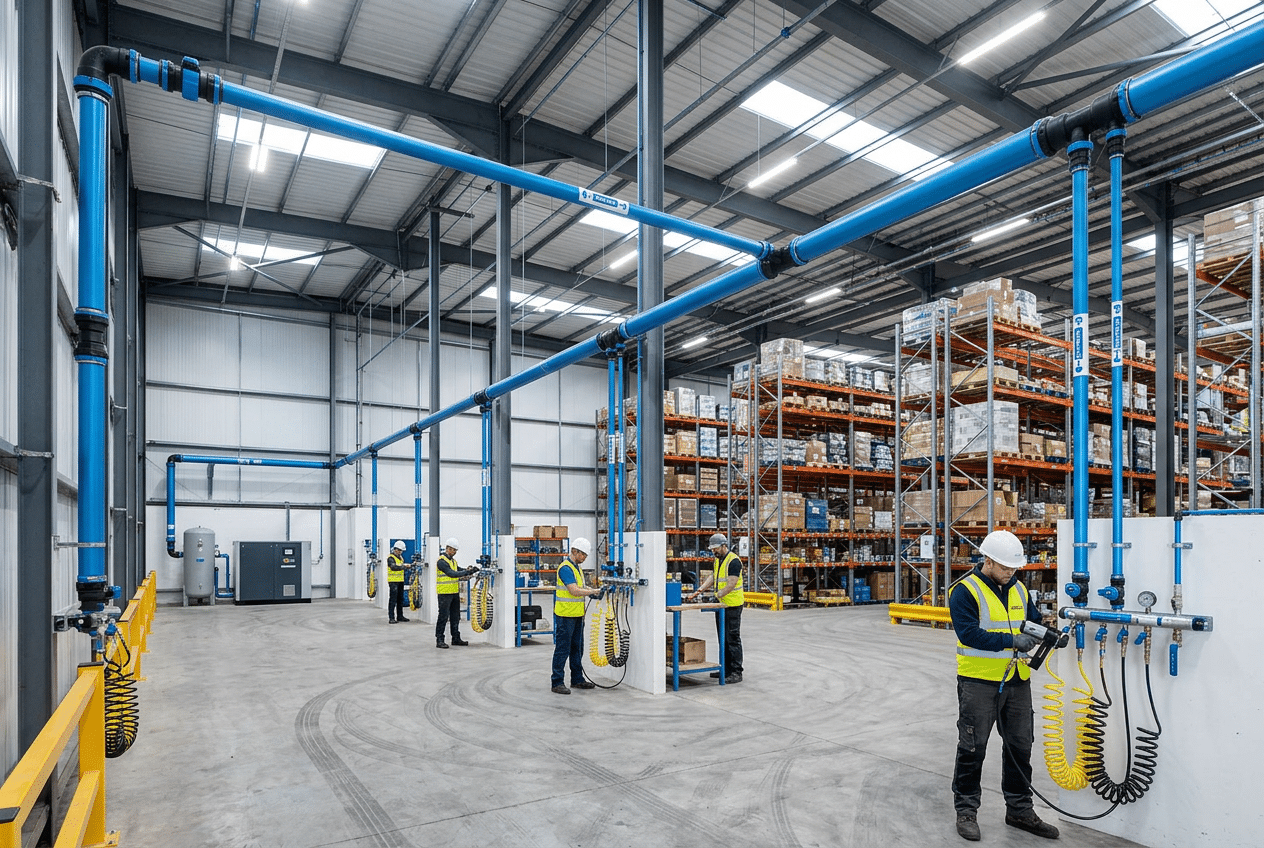
Absolutely. Productivity is all about workflow and minimizing downtime. How much time is wasted untangling hoses or searching for an open air outlet? How often does a project get delayed because a tool is underperforming due to low pressure? A well-designed system with dedicated outlets, organized hose reels, and consistent, reliable pressure eliminates these small but cumulative frustrations. When your tools work as they should, every time, and your workspace is organized and safe, you can focus on the task at hand. This increase in efficiency and reduction in rework means more work gets done in less time, which is the ultimate return on investment for any business or serious hobbyist.