
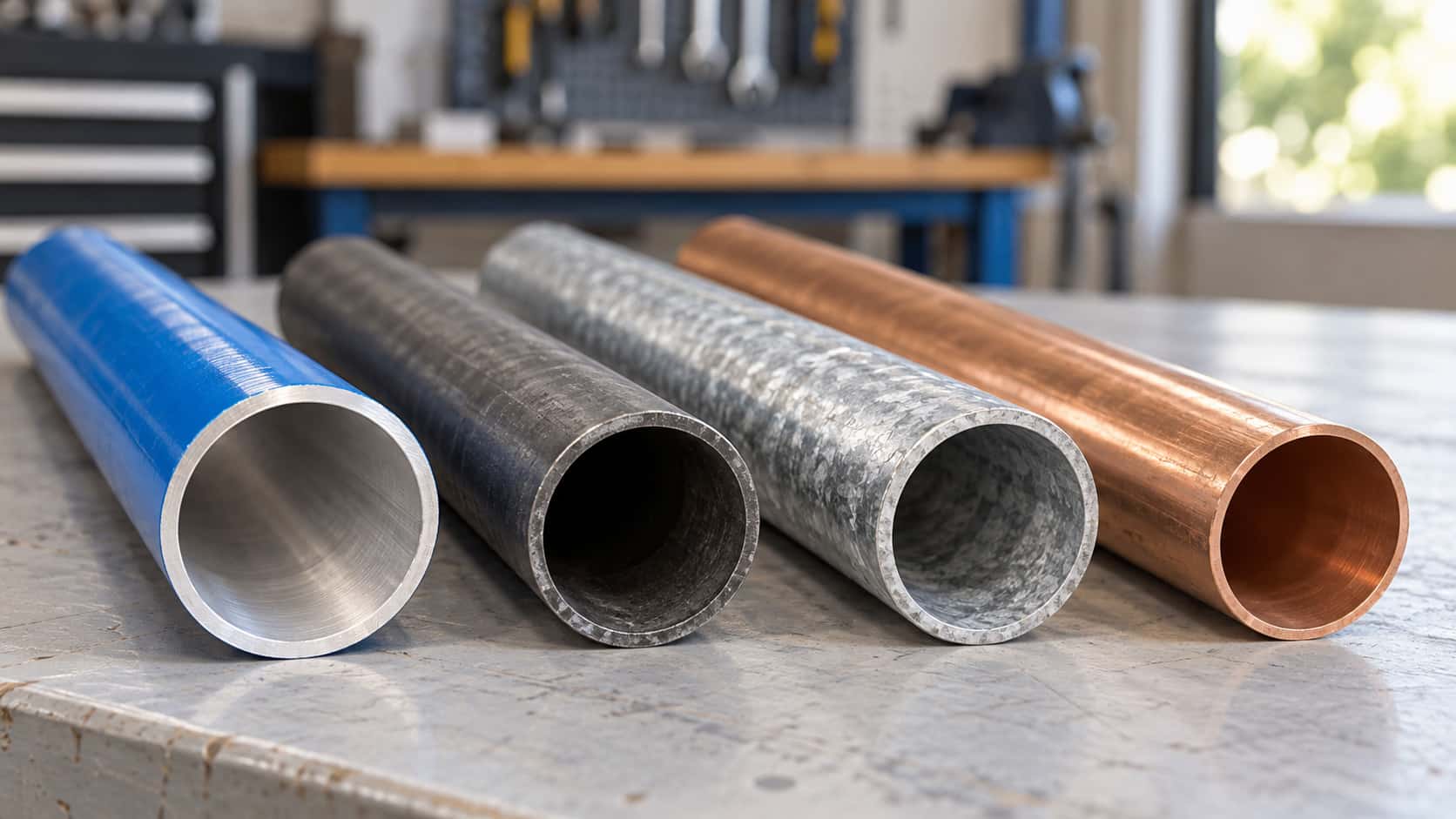

When you are planning a compressed air system, choosing the right pipe can make a lasting difference in installation, maintenance, and equipment performance. Black iron, galvanized steel, copper, and aluminum all have a place in the conversation. The question is which material fits your workspace, operating requirements, and plans for the future.
For many workshops and industrial facilities, aluminum compressed air piping offers an appealing combination of corrosion resistance, manageable weight, and convenient assembly. At Aluminum Air Pipe, we help customers understand these advantages while considering the complete system. Here are answers to common questions that come up when comparing compressed air pipe materials.
Is aluminum air pipe better than black iron, galvanized steel, or copper?
For many general compressed air distribution applications, a purpose-built aluminum piping system is a strong choice, particularly when easy installation and future modifications matter. Its advantages are most noticeable when compared with heavy, threaded steel systems. Copper remains a capable alternative, so aluminum is not automatically better for every installation.
The best choice depends on operating pressure, temperature, air quality requirements, environmental conditions, and total installed cost. Comparing those factors gives you a more useful answer than choosing by material price alone.
How does aluminum air pipe compare with black iron?
Black iron pipe, commonly used to describe uncoated steel pipe, is durable and widely available. However, moisture inside a compressed air system can cause internal rust. Corrosion can contribute particles to the air stream and make the interior surface rougher.
Aluminum does not develop iron rust, which is an important advantage for long-term distribution cleanliness. It is also lighter to handle. Traditional threaded black iron installations require pipe preparation and joint assembly that can add labor, especially when the layout includes numerous branches.
Is galvanized steel better because it has a protective coating?
Galvanized steel has a zinc coating that helps protect the underlying steel from corrosion. This gives it an advantage over uncoated steel in suitable conditions, but it does not remove every corrosion concern. Threaded areas, damaged coatings, and service conditions can affect performance.
Galvanized steel also retains the weight and assembly considerations of steel piping. Aluminum may be a more convenient option for a facility that expects to add air outlets or rearrange equipment. The decision should account for both the coating’s protection and the practical work involved in maintaining the installation.
How does aluminum compressed air pipe compare with copper?
Copper is a respected compressed air piping material because it resists iron rust and has a smooth interior. A properly specified and installed copper system can provide dependable service. Aluminum’s advantage over copper often centers on its lighter weight and modular connection methods.
The Compressed Air and Gas Institute’s compressed air system design guidance discusses material selection and recognizes the smooth internal surfaces of both aluminum and copper. Customers should therefore compare installation methods, application requirements, and project costs rather than assume copper delivers inferior airflow.
Why do customers choose AIRnet aluminum piping?
Customers often want a system that is straightforward to install and practical to expand. Aluminum Air Pipe’s AIRnet compressed air pipe combines corrosion-resistant aluminum with an additional protective coating inside and outside. Multiple pipe diameters allow the system to be selected around the facility’s airflow needs.
These features make AIRnet worth considering for automotive shops, fabrication facilities, and other businesses distributing compressed air to multiple workstations. Selecting the correct diameter and compatible fittings remains essential to getting the performance you expect.
Will aluminum piping reduce pressure drop?
Aluminum’s smooth interior can help limit friction, but material is only one part of pressure-drop performance. Pipe diameter, run length, fitting restrictions, and simultaneous equipment demand also affect how much pressure reaches your tools.
An undersized aluminum line can still restrict airflow. A well-designed copper or steel system may perform adequately for its intended use. The goal is to evaluate the complete distribution network and choose piping that supports peak demand without excessive pressure loss.
Can switching to aluminum air pipe lower energy costs?
It can support improvements when a replacement project addresses restrictions, leaks, or deteriorated piping. However, changing material alone does not guarantee a specific energy saving. Results depend on the condition of the existing system and the design of its replacement.
The U.S. Department of Energy provides compressed air efficiency resources covering system analysis, leak reduction, air quality, and pressure management. These resources reinforce the value of looking beyond a single component. A piping upgrade works best as part of a thoughtful plan for the entire compressed air system.
Is aluminum compressed air piping easier to install?
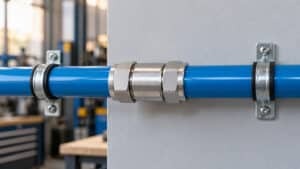
Modular aluminum systems can simplify assembly compared with traditional threaded steel installations. AIRnet PF Series fittings use a push-to-connect design, and the lightweight pipe is easier to handle during positioning. Installation procedures still need to be followed carefully, including pipe preparation and the requirements for the selected fitting series.
Proper support is equally important. Suitable pipe clips help secure the line, with spacing and mounting arrangements determined by the manufacturer’s instructions. Planning supports, valves, and outlet locations before installation helps the project come together more smoothly.
Is aluminum air pipe less expensive than steel or copper?
The answer depends on the complete project. Pipe and fitting prices are only the beginning. Installation labor, required tools, access to the work area, maintenance, and later modifications all contribute to cost.
Ask for a complete bill of materials and an installation estimate for each suitable option. A system with a lower initial material price may require more labor, while a modular system may offer advantages when changes are needed. Comparing actual project quotes makes the decision clearer.
Should I replace an existing steel or copper air system?
A functioning system does not need replacement simply because aluminum is available. Consider an upgrade when inspection identifies corrosion, recurring leaks, insufficient capacity, or a layout that no longer serves your equipment.
Aluminum Air Pipe can help you evaluate a new installation or expansion with free design services, pipe sizing, and bill of material creation. Share your layout, airflow demand, and operating requirements with our team. Together, we can help you choose a compressed air piping system that fits your business and makes room for what comes next.