
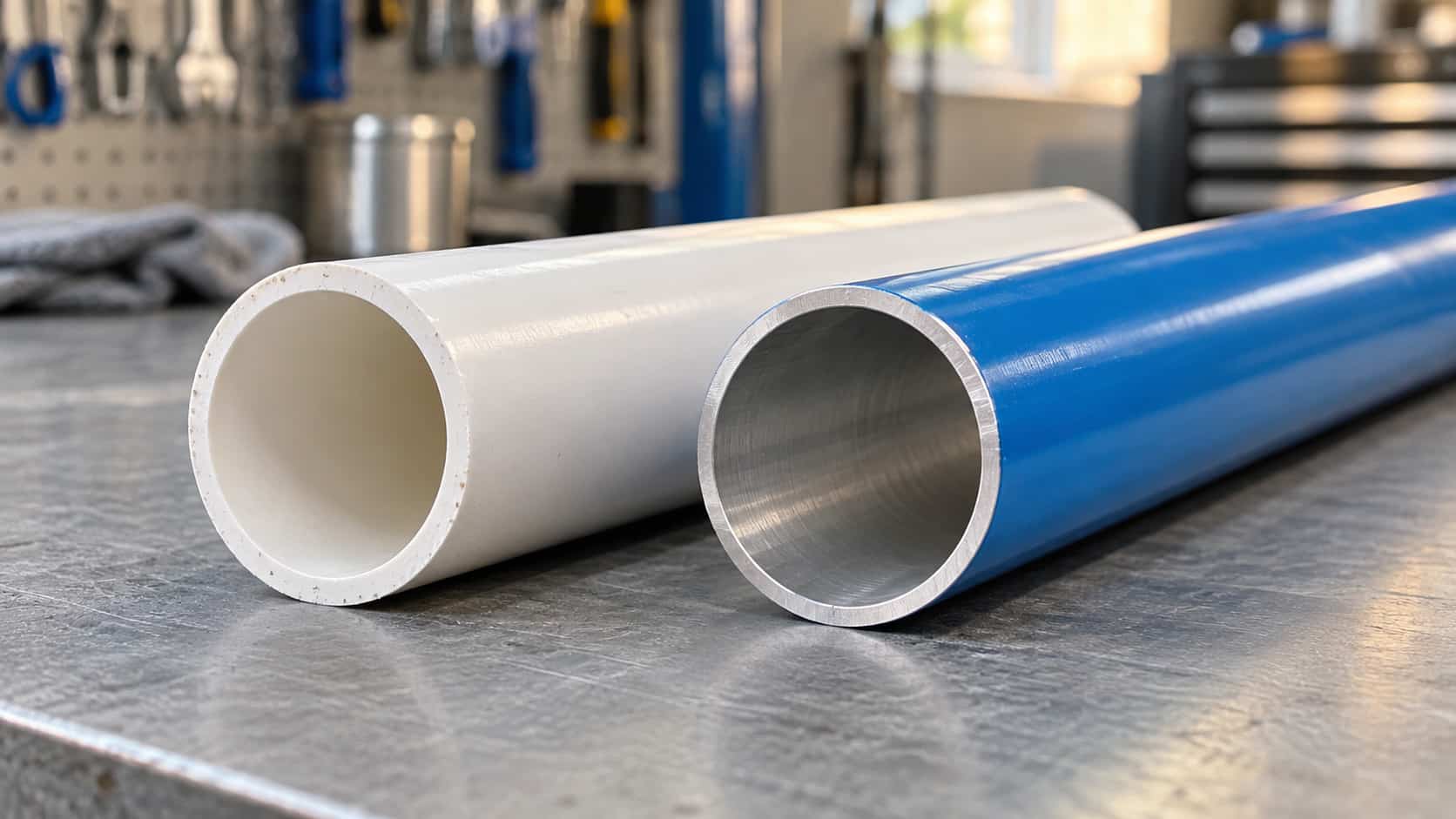
PVC pipe is inexpensive, lightweight, and easy to find, so it is understandable that customers consider it when planning compressed air lines. If you have leftover plumbing pipe or want to keep installation costs down, it may seem like a convenient solution. However, ordinary PVC plumbing pipe is not a suitable choice for exposed compressed air distribution.
At Aluminum Air Pipe, we want you to feel confident about the system you install. Understanding why PVC presents a hazard, and what to use instead, can help you build dependable air lines for your tools, equipment, and future projects.
Can I use PVC pipe for compressed air?
No. Ordinary PVC plumbing pipe should not be used for exposed compressed air lines in a garage, workshop, or industrial facility. Its ability to carry pressurized water does not establish suitability for compressed air. Choose pipe and fittings specifically intended for compressed air service and suitable for your operating conditions.
The Occupational Safety and Health Administration’s PVC compressed air safety bulletin documents injuries caused by ruptured PVC air lines. The concern extends beyond losing pressure: a failure can send sharp plastic fragments into the surrounding area.
Why is compressed air different from pressurized water?
Compressed air stores energy because the gas has been compressed into a smaller volume. If a pipe ruptures, that air expands rapidly. When the pipe material fractures into pieces, the escaping energy can propel those fragments outward.
That is why a water pressure rating alone is not enough when selecting compressed air piping. Suitability involves the material’s failure behavior, the intended service, and the complete system’s pressure and temperature limits. A pipe that works well for plumbing may be inappropriate for distributing compressed gas.
Is Schedule 80 PVC safe for compressed air?
A thicker wall does not make ordinary PVC plumbing pipe suitable for exposed compressed air service. Schedule 80 describes pipe dimensions, including wall thickness; it is not an approval for compressed air use.
The same principle applies to Schedule 40 PVC. Rather than comparing the printed water pressure rating with your compressor setting, look for a piping system whose manufacturer specifically permits compressed air service under your operating conditions. This helps avoid a common and potentially dangerous misunderstanding.
What does OSHA say about PVC compressed air piping?
OSHA’s guidance on above-ground thermoplastic piping explains that piping used for compressed air or gases must be constructed of, or encased in, shatter-resistant material. It identifies exposed above-ground PVC as a hazard because PVC lacks shatter resistance.
The interpretation discusses protective encasement, but that should not be treated as a do-it-yourself workaround for ordinary plumbing pipe. Manufacturer restrictions and applicable installation requirements still matter. For a typical shop installation, choosing a purpose-built compressed air system is a more straightforward approach.
Does running my compressor at a lower pressure make PVC acceptable?
Lowering the pressure does not establish that ordinary PVC pipe is suitable for compressed air. There is no universal compressor setting that turns plumbing pipe into an appropriate air distribution product.
A system that has operated without a failure is not proof of suitability, either. When reviewing an existing installation, evaluate the manufacturer’s permitted uses rather than relying on how long the pipe has been in place. It is much easier to plan a replacement than to deal with an unexpected rupture.
Are all plastic compressed air pipes unsuitable?
No. Ordinary PVC plumbing pipe should not be confused with specialized plastic piping systems designed for compressed air. Material formulation, failure behavior, fittings, and permitted operating conditions can differ.
Always verify the specific product’s intended use. A general description such as “plastic pipe” or “high-pressure tubing” does not tell you enough. The manufacturer’s documentation should confirm suitability for compressed air and explain the conditions and installation methods required.
What should I use instead of PVC for compressed air lines?
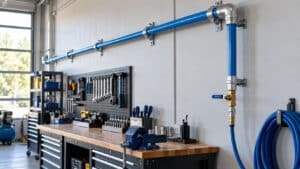
Purpose-built aluminum compressed air piping is an excellent option for many shops and industrial facilities. Properly specified steel, copper, and stainless steel systems can also be appropriate. The right choice depends on your air demand, environment, installation needs, and budget.
Aluminum Air Pipe offers AIRnet compressed air pipe, made from corrosion-resistant aluminum with an additional protective coating inside and outside. Available in multiple diameters, it allows customers to select piping around their distribution requirements rather than adapt ordinary plumbing materials to a different service.
Is aluminum air pipe difficult to install?
Modular aluminum systems can make installation manageable, especially when compared with traditional threaded steel piping. Lightweight pipe and compatible connections help simplify handling and assembly. However, careful preparation and adherence to the manufacturer’s instructions remain essential.
Supports also belong in the installation plan. Correctly sized pipe clips help secure piping along its route. Follow the specified support spacing and connection procedures, and confirm that the selected pipe, fittings, and accessories belong together.
What should I do if my existing compressed air lines are PVC?
Arrange to take the PVC distribution system out of service and have it evaluated for replacement by a qualified compressed air installer. Follow the equipment’s shutdown and energy-isolation procedures, and ensure all trapped pressure is safely relieved before anyone works on the piping.
Do not cut, loosen, or attempt to repair a pressurized line. Replacing unsuitable piping is also an opportunity to review outlet locations, airflow demand, moisture control, and future expansion so the new system better serves your workspace.
How can Aluminum Air Pipe help me choose a replacement system?
Start by gathering your facility dimensions, compressor information, operating pressure, and the airflow requirements of equipment that runs simultaneously. These details help determine pipe size and identify the components needed for the layout.
Aluminum Air Pipe offers free design services, pipe sizing, and bill of material creation to help customers plan their projects. Whether you are replacing PVC air lines or building a new system, our team can help you choose suitable products and develop a practical layout. A well-planned compressed air installation gives you dependable distribution and confidence in the materials carrying air through your facility.